
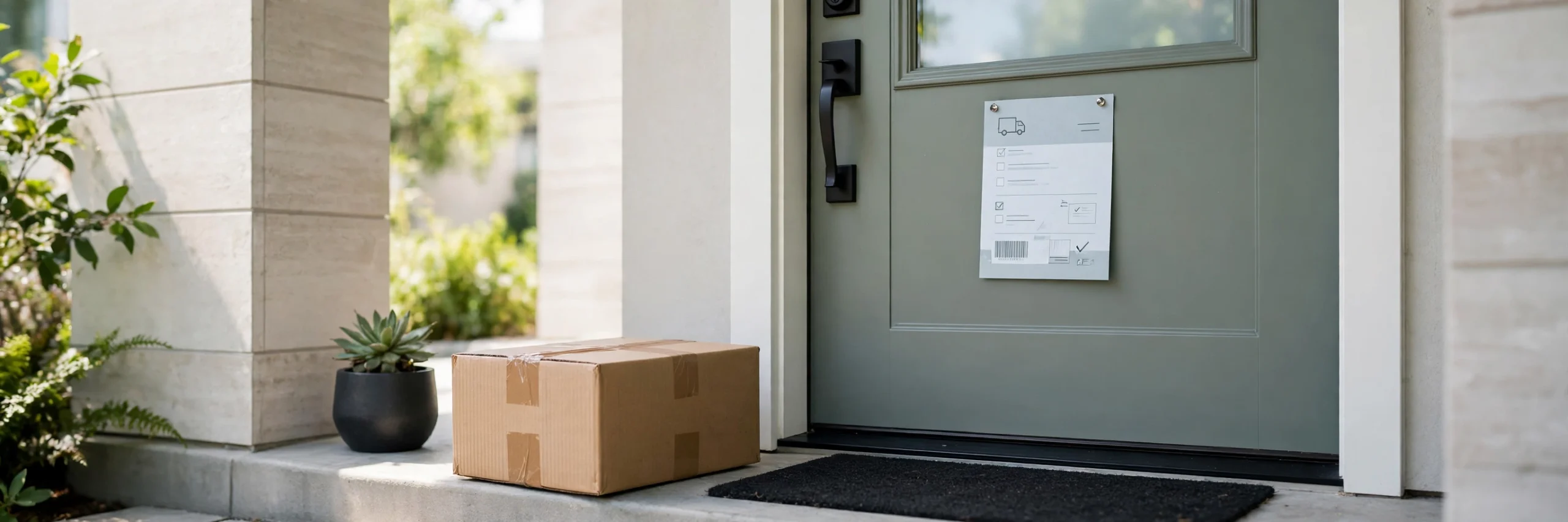
Seeing “delivery failed” or “delivery attempted” on your tracking page is annoying — especially when you were home, or when the parcel contains something urgent. The good news is that a failed delivery almost never means the parcel is lost. In most cases it is sitting at a local depot, post office, or collection point, waiting for you to act.
This guide explains the common reasons parcel delivery fails, what to do next for USPS, Royal Mail, Canada Post, Australia Post, India Post, Pakistan Post, DHL, China Post, Japan Post, and La Poste, and how to stop it happening again.
What Does “Delivery Failed” Mean?
“Delivery failed” means the courier or postal worker tried to deliver your parcel and could not complete the delivery. The parcel is not lost — it is usually returned to the depot or held at a nearby collection point.
Related tracking messages include “delivery attempted” (the courier came but nobody answered), “addressee not available” (nobody was home to sign), “access issue” (a locked gate, no buzzer, or no safe place to leave the parcel), “address incorrect or incomplete,” “refused” (someone at the address refused the parcel), “customs or payment required,” and “parcel damaged.” The exact wording differs by carrier, but the next steps are similar everywhere.
Common Reasons for Failed Delivery
The most common reason is that nobody was home. Parcels that need a signature cannot be left at the door, so if nobody answers, the courier leaves a delivery notice and takes the parcel back. An incorrect or incomplete address — a missing apartment number, wrong postcode, or misspelt street — is another frequent cause, especially with international parcels where address formats differ.
Access problems also cause failures: locked gates, apartment intercoms, no doorbell, a dog in the yard, or roadworks blocking the street. Couriers work to tight schedules and cannot always wait. If a parcel does not fit in the mailbox and there is no safe place to leave it, the courier will take it back rather than leave it outside.
For international parcels, delivery can fail if customs duty, tax, or a handling fee is unpaid — the parcel is held until the fee is paid. Sometimes a parcel is refused because it was unexpected or an unexpected fee was demanded on delivery. Extreme weather, strikes, and holiday backlogs can also suspend delivery attempts.
What to Do Next: Step by Step
Step 1: Read the Tracking Details
Open the full tracking page on the carrier’s website. Look for the reason given, the time of the attempt, and any instructions — a collection point address, a redelivery link, or a reference number. The short status on a marketplace or shop app often hides these details.
Step 2: Check for a Delivery Notice Card
Many postal services leave a paper card when delivery fails — USPS leaves a notice, Royal Mail leaves a “Something for you” card, and Australia Post and Canada Post do the same. The card tells you where the parcel is held and by when you must collect it. Check your mailbox, door, and porch.
Step 3: Arrange Redelivery
Most carriers offer free redelivery, usually within a few days. USPS lets you schedule redelivery online, by phone, or by returning the notice slip, or collect from the post office on the notice. Royal Mail offers free redelivery online or collection from the local delivery office. Canada Post allows redelivery or pickup from the post office or parcel locker on the notice. Australia Post offers redelivery through its app or website. India Post and Pakistan Post allow collection from the delivery post office with the notice and your ID, or redelivery on request. DHL lets you reschedule online using the tracking number, or choose a pickup point. La Poste, Japan Post, and China Post offer redelivery forms online or by phone. Book redelivery for a day when someone will be home, and add delivery instructions if allowed — gate code, intercom number, or a safe place.
Step 4: Collect the Parcel in Person
If redelivery is not possible, collect the parcel yourself. Bring the delivery notice card or tracking number, photo ID matching the recipient’s name, and the collection reference if one was given. Check the collection deadline: most carriers hold parcels for 7–15 days; after that, the parcel is returned to the sender. International parcels may be held longer, but do not assume so — check the notice.
Step 5: Pay Any Fees Due
If tracking says a customs fee, duty, or handling charge is due, pay it through the official carrier website or at the counter. Never pay through a link in an unexpected text message or email — delivery-fee scams are common. Go to the carrier’s own website and enter the tracking number there.
Step 6: If the Address Was Wrong, Fix It Fast
Contact the carrier immediately and ask whether the address can be corrected before the parcel is returned to the sender. Some carriers allow an address correction for a fee; others require the parcel to go back and be re-sent. If you are the sender, see our guide on changing a delivery address after posting.
Frequently Asked Questions
How long will the post office hold a failed delivery?
Usually 7–15 days, depending on the carrier and country. USPS typically holds items for 15 days and Royal Mail for 18 days. Check the notice card or tracking page for the exact deadline.
Can I arrange redelivery for free?
Yes, in most cases. USPS, Royal Mail, Canada Post, Australia Post, and DHL all offer free redelivery or free collection. Some carriers charge for a second redelivery attempt or for delivery to a new address.
What if I missed the collection deadline?
Contact the carrier immediately — the parcel may still be at the depot or on its way back. If it has been returned, ask the sender to re-send it, or ask the seller for a refund or replacement.
The Bottom Line
A failed delivery is usually a small problem with a quick fix: read the tracking details, find the notice card, and book redelivery or collect the parcel before the holding period ends. Keep your address complete, add delivery instructions, and use a pickup point when you are out — and most failed deliveries will never happen in the first place.