
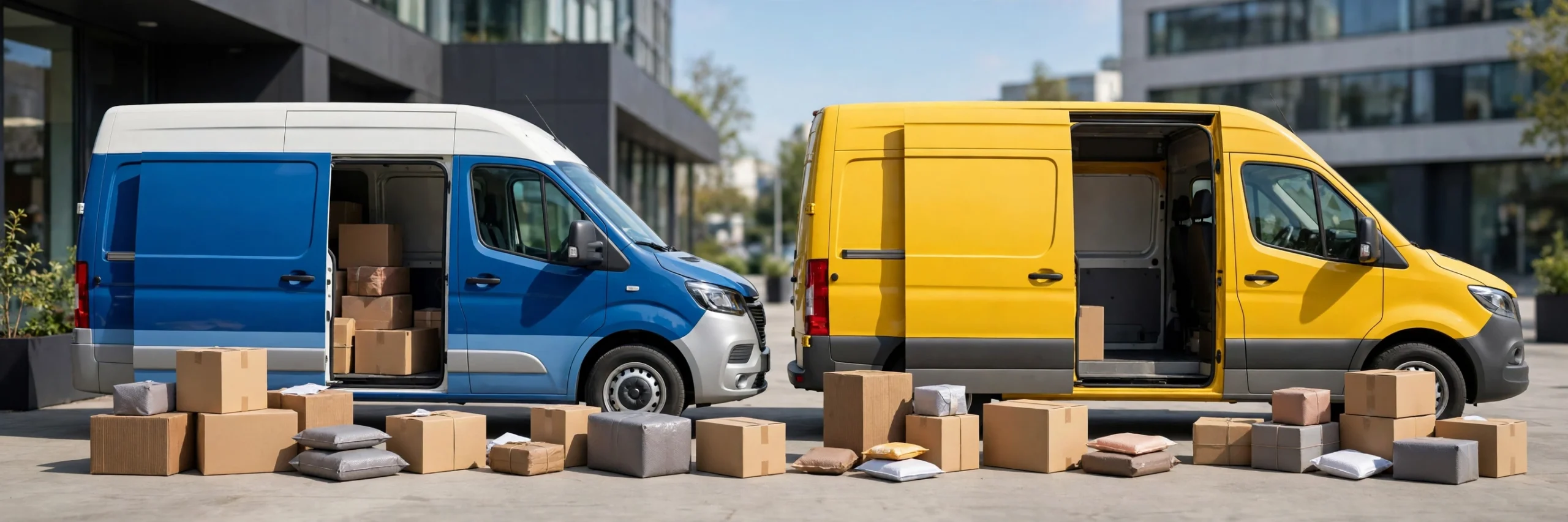
When you need to send a parcel, you have two choices: the national post office or a private courier. The post office — USPS, Royal Mail, Canada Post, Australia Post, India Post, Pakistan Post, La Poste, Japan Post, China Post and others — is the public service. A courier — such as DHL, FedEx, UPS or DPD — is a private company. The post office is usually cheaper for small, light, non-urgent parcels; a courier is often better value for heavy, large, urgent or high-value parcels.
What Is the Difference?
The post office is a national service with a universal network: it delivers to every address, including remote villages, and to almost every country through the Universal Postal Union, offering letters, registered post, speed post, EMS express mail and ordinary parcels. A courier is a private company that collects parcels from your home or office and delivers them, usually with a promised delivery time, specialising in parcels, express delivery and international shipping with its own vehicles, aircraft and tracking systems.
Price — Which Is Cheaper?
Small and light parcels: the post office usually wins. For a parcel under 1–2 kg sent within the country, ordinary post and standard parcel services are cheapest, because the post office delivers millions of items on fixed daily rounds. Heavy and large parcels: couriers often become cheaper. For parcels over 5–10 kg, a heavy box can cost less with DHL, FedEx, UPS or DPD than with the post office. International parcels: the post office is often cheaper for small, light parcels by standard or registered post, especially to remote countries. For urgent international parcels, couriers are often faster and sometimes cheaper on express: DHL Express or FedEx International Priority can cost a similar amount to EMS from the post office but arrive a day or two sooner. Letters and documents: the post office is almost always cheaper — couriers charge a minimum parcel rate far higher than a stamp or registered letter fee. Prices change often, so compare both for your exact parcel on the same day.
Speed, Tracking and Convenience
Post office standard domestic parcels usually take 2–7 working days; express services such as EMS, Speed Post, USPS Priority Mail or Royal Mail Special Delivery take 1–2 working days domestically and 3–7 days internationally. Standard courier delivery is usually 1–3 working days domestically, and express courier delivery can be next working day, or 1–3 days internationally, often with a guaranteed time. If speed matters, a courier is usually faster; if you have a week to spare, standard post is fine and cheaper.
For tracking, registered post, speed post and EMS are tracked at each scan point, but ordinary post is not tracked in most countries. Almost every courier parcel is tracked in real time, with detailed scans, a delivery window and a photo or signature on delivery. For valuable parcels, choose a tracked service from either provider — never send a valuable parcel by untracked ordinary post.
For convenience, the post office usually means dropping the parcel at a counter, though some services offer home collection for a fee. Couriers usually collect from your home or office: you book and pay online, print the label and schedule a pickup, and can redirect or reschedule through the app. Regular senders save a lot of time with courier collection; occasional senders will find the post office counter simple and familiar.
Reliability and Insurance
Standard postal compensation is usually limited and based on weight or service; registered and insured services offer higher cover, but claims can take weeks. Couriers usually include basic cover in the price and offer declared-value cover for an extra fee, with faster claims and tracking evidence to prove what happened. For high-value items, always declare the value and buy extra cover, whichever service you use, and keep the receipt and tracking number until delivery.
Which Should You Choose?
Choose the post office if: the parcel is small, light and not urgent; you are sending a letter or documents; you are sending to a remote or rural address; you want the lowest price and can wait; or you prefer a local counter drop-off. Choose a courier if: the parcel is heavy, large or high-value; you need guaranteed next-day or express delivery; you want detailed real-time tracking; you want home collection and online booking; or you are sending internationally and need fast customs clearance. Many online sellers use both: the post office for small, light orders, and a courier for heavy, urgent or high-value orders. A business account with a courier can make it cheaper than the post office even for smaller parcels.
Quick Comparison
| Feature | Post Office | Courier |
|---|---|---|
| Best for | Letters, small and light parcels | Heavy, large, urgent and valuable parcels |
| Price — small parcel | Usually cheaper | Usually more expensive |
| Price — heavy parcel | Can be expensive | Often cheaper |
| Speed — standard | 2–7 working days | 1–3 working days |
| Speed — express | 1–3 days (EMS / Priority) | Next day / 1–3 days international |
| Tracking | Tracked services only | Almost always included, more detailed |
| Collection | Usually drop-off at counter | Usually home or office collection |
| Coverage | Every address, including remote areas | Wide, but remote areas cost extra |
| Insurance | Limited, extra cover available | Basic cover included, extra cover available |
How to Get the Best Price
Weigh and measure your parcel accurately, use the smallest strong box that fits safely, compare the post office and at least one courier for the same parcel, book online for a discount, avoid express unless you really need the speed, and ask about a business account or volume discount if you send parcels regularly.
Frequently Asked Questions
Which is safer for valuable items?
Both are safe with a tracked, insured service. Couriers offer more detailed tracking and faster claims, but a registered, insured postal service is also reliable. Never send a valuable item by untracked ordinary post.
Conclusion
There is no single winner: for letters and small, light, non-urgent parcels, the post office is usually cheapest. For heavy, large, urgent or high-value parcels, a courier is often faster and sometimes cheaper, with better tracking and home collection. Compare price, speed and tracking for your exact parcel, use a tracked service for anything important, and you will get the best value every time.