
Introduction
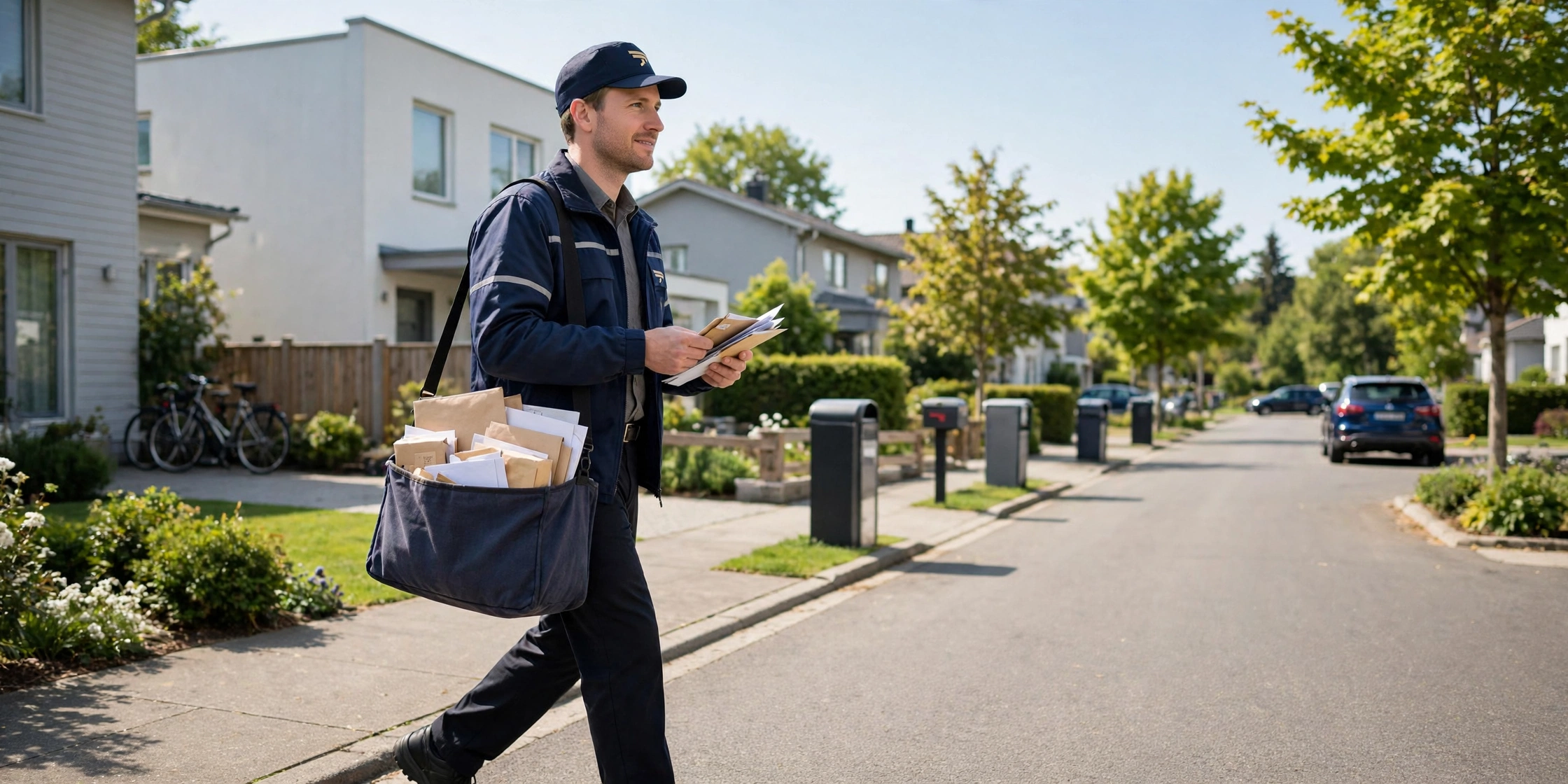
A postman — also called a mail carrier or postal worker — delivers letters and parcels to homes and businesses, rain or shine. It is a stable, physical, community-facing job that does not usually require a university degree, which is why thousands of people apply every year. This guide explains how to become a postman, what the requirements are, how to apply, and what salary you can expect in the United States, United Kingdom, Canada, Australia, India, Pakistan, France, Japan and China.
What Does a Postman Do?
A typical day includes sorting mail at the delivery office, loading it into a van, bicycle or delivery bag, delivering it on a fixed route (a “walk” or “round”), collecting mail from post boxes, getting signatures for registered and tracked items, and returning undeliverable mail. In smaller post offices, postmen may also serve customers at the counter. New postmen often start as relief staff, covering different routes before getting a fixed round.
Basic Requirements
Age, Citizenship and Education
You must usually be at least 18, with no strict upper age limit as long as you pass a medical check. You normally need citizenship or the right to work in the country — USPS requires US citizenship or lawful permanent residence, while Royal Mail, Canada Post and Australia Post require the right to work in their countries. No university degree is needed. Most services ask for a high school diploma or equivalent (USPS, Canada Post, Australia Post), GCSEs including English and maths in the UK, or a Class 10 or 12 pass for many India Post and Pakistan Post posts. Good literacy matters: you must read addresses, sort mail accurately and complete delivery records.
Driving Licence and Fitness
A licence is required for many, but not all, jobs. Walking rounds may not need one, but most modern rounds involve driving a van. USPS, Royal Mail, Canada Post and Australia Post usually require a valid, clean licence for driving roles, and a motorcycle licence is often needed in India and Pakistan. Delivery is physical work — walking miles a day, carrying a mailbag and working outdoors in all weather — so most services require a basic medical check and the ability to lift parcels of around 15–20 kg. A criminal background check is standard almost everywhere, because postmen handle valuable and sensitive mail. Employers also look for a sense of direction, time management, honesty and friendly customer service.
How to Apply
Apply only through the official careers page of your national postal service — USPS Careers, Royal Mail Jobs, Canada Post Careers, Australia Post Careers, India Post recruitment, Pakistan Post, La Poste, Japan Post or China Post. Real postal jobs never ask you to pay a fee to apply.
First, submit the online form with your education, work history, licence and right-to-work details. India Post, for example, ranks applicants on a merit list based on school marks. Next, take the online assessment: USPS uses a virtual entry assessment testing memory, attention to detail and judgement, and Royal Mail and Australia Post use similar tests. Then attend an interview, document check, background check and sometimes a driving test, bringing original ID, proof of address, certificates and your licence. Successful candidates pass a medical check and start paid training, lasting a few days to a few weeks, covering sorting, safe lifting, scanners and driving. The whole process usually takes one to three months.
Postman Salary
Pay varies by country, experience and location, so treat these as broad starting ranges and check the vacancy advert for exact pay. In the US, USPS carriers typically start around $20–$25 per hour, with overtime, health benefits and a pension. In the UK, Royal Mail starters typically earn around £25,000–£30,000 a year full-time, with overtime and pension. In Canada, letter carriers typically start around CAD $22–$28 per hour. In Australia, delivery officers typically earn around AUD $28–$35 per hour, with penalty rates for weekends. In India and Pakistan, pay follows government scales by post and grade, plus allowances. In France, Japan and China, pay follows national and company scales, usually with social insurance, paid leave and a pension. Most postmen also get paid leave, a uniform and overtime at busy times such as Christmas.
Career Growth and Tips
Postal services hire part-time, weekend and temporary staff for peak periods — a good way in, as many full-time postmen began as temporary staff. With experience you can become a senior postman, delivery supervisor, sorting office manager, driver trainer or post office manager. To improve your chances, apply for several rounds and locations, keep your licence clean, practise map reading and address sorting, and show reliability in your work history.
Frequently Asked Questions
Do I need a degree to become a postman?
No. Most services only require a high school education or equivalent. Good English, maths and computer skills help, but a degree is not needed.
What is the age limit?
You must usually be at least 18. There is generally no upper age limit if you pass the medical and fitness checks, though rules vary by country.
Is a driving licence compulsory?
Not for every role — walking rounds may not need one. But most driving rounds do, and having a licence opens far more vacancies.
Can I become a postman with no experience?
Yes. Most jobs are entry-level and include paid training. Delivery or customer service experience helps, but it is not required.
Is being a postman a good job?
For many, yes: stable, with a pension and benefits, active outdoor work and a clear path to promotion. The downsides are early starts, bad weather and the physical demands.
Conclusion
Becoming a postman is straightforward: meet the age, education, residency and fitness requirements, hold a licence if you want a driving round, apply through the official careers website, pass the assessment, interview and background checks, and complete paid training. Check the current vacancies on your national postal service’s careers page and prepare your documents today.