
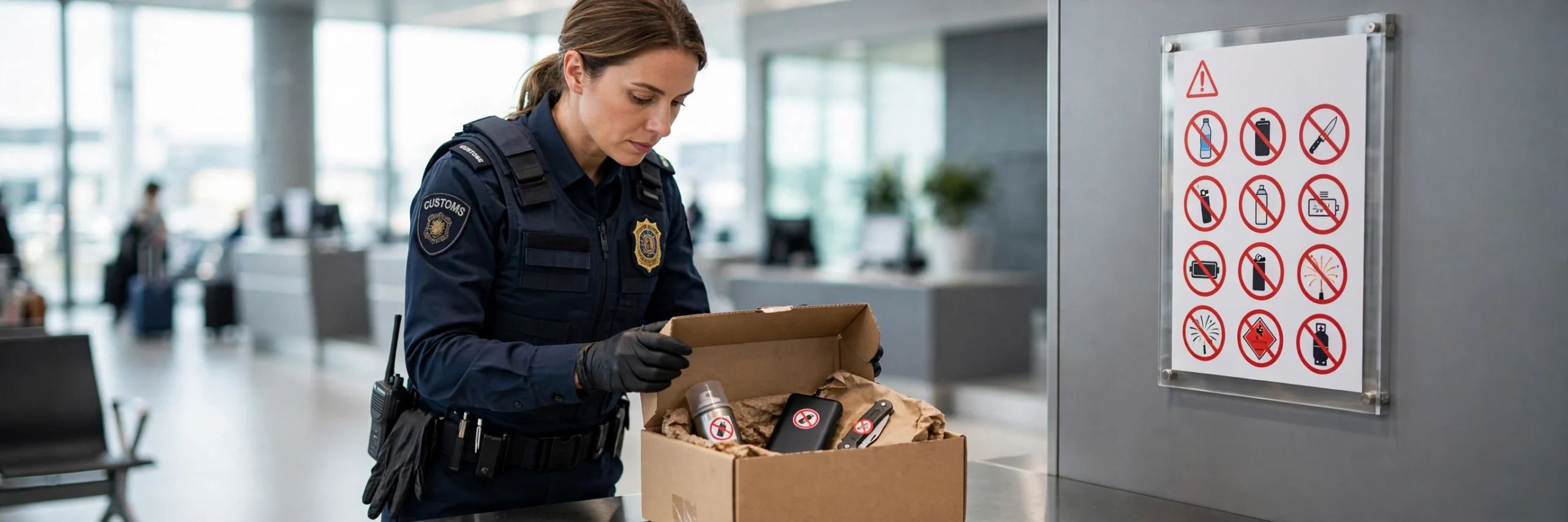
Before you post a parcel abroad, know this: not everything can go in the mail. Every country bans or restricts certain items, and postal services such as USPS, Royal Mail, Canada Post, Australia Post, India Post, Pakistan Post, DHL, China Post, Japan Post and La Poste all enforce those rules. Sending a prohibited item can mean your parcel is delayed, returned, seized or destroyed — and in serious cases, you could face a fine.
Why Are Some Items Prohibited?
International mail crosses borders, so two sets of rules apply at once: the rules of the postal service and the import rules of the destination country. Items are banned for safety (things that can catch fire, explode or leak), health (things that can spread disease), law (things illegal to own or import) and security (things that could be used for fraud or crime). That is why a parcel legal to post inside your own country may be prohibited abroad.
Prohibited Items — Almost Always Banned
Dangerous goods: explosives, fireworks, flares and ammunition; flammable liquids such as petrol, solvents and lighter fuel; flammable gases including camping gas canisters; corrosive substances such as strong acids; toxic and infectious substances; damaged or recalled lithium batteries; and matches and lighters, except where a service allows a small number under strict rules.
Drugs and weapons: illegal drugs, including cannabis, cocaine and heroin — even if legal in your home country — plus prescription medicines sent without documentation and controlled substances such as steroids. Firearms, parts and ammunition; knives and bladed items in many countries, including some kitchen knives and replicas; and pepper spray and tasers, banned in most destinations.
Cash, animals and fakes: never send cash, coins, banknotes or bearer bonds by post. Live animals are banned except for a few cases such as bees under special rules. Some meat and dairy products are banned for disease control, human remains need special permission, and counterfeit goods and pirated books, films, music and software are prohibited.
Restricted Items — Allowed Only With Conditions
Lithium batteries and electronics: the most common cause of rejected parcels. Most services allow a battery installed in a device, such as a phone or laptop, but loose lithium batteries, power banks and damaged batteries are restricted or banned on international airmail. DHL and other couriers have their own rules and may accept items the post office will not. Always declare batteries on the customs form.
Food, plants and seeds: many countries ban fresh fruit, vegetables, meat and dairy, and restrict packaged food, because of pests and disease. Australia, New Zealand, Japan and the United States have especially strict biosecurity rules, and seeds and plants usually need a phytosanitary certificate.
Alcohol, tobacco and vapes: restricted or banned in many countries, and banned completely in several Middle Eastern and Asian countries. Vapes and e-liquids are restricted in many destinations. Where allowed, duty is usually charged and the sender must be of legal age.
Perfume, aerosols, medicines and valuables: perfume, nail varnish and aerosols contain flammable liquids or gases and are usually banned in international airmail. Prescription medicines usually need a prescription copy, a doctor’s letter and a customs declaration — and a medicine common in one country may be controlled in another. Jewellery, gold and high-value items often require a registered or insured service, and compensation is limited unless you buy extra insurance.
Country Differences You Must Check
The same item can be legal in one country and banned in another. Australia and New Zealand are very strict on food, plants, seeds, soil and animal products — declare everything or risk a fine. The US is strict on alcohol, tobacco and some food; the UK on aerosols, perfumes, lithium batteries and knives; Canada restricts cannabis, alcohol and tobacco; India and Pakistan restrict currency and goods needing an import licence; China restricts publications and certain electronics; Japan is strict on medicines and food; France and the EU restrict food of animal origin from outside the EU; and many Middle East destinations ban alcohol and pork completely. Check the destination’s list on your postal service’s website or the Universal Postal Union (UPU) country pages first.
Customs Forms and What Happens If You Break the Rules
For international mail you must complete a customs declaration (CN22 for low-value items, CN23 for higher-value parcels, or an electronic form for couriers such as DHL), listing every item, quantity, value and description. Never write “gift” to hide a prohibited item, and never under-declare the value to save duty. Customs can open parcels, and a false declaration can lead to seizure or a fine.
If you send a prohibited item, the parcel may be returned at your expense, seized and destroyed with no compensation, or held for inspection for weeks. For drugs, weapons, cash or counterfeit goods, you may face a fine or prosecution, and a courier such as DHL may close your account. If you realise your mistake, contact the post office or courier immediately — they may intercept it before it leaves the country.
How to Check Before You Post
Search your postal service’s prohibited items list online — USPS, Royal Mail, Canada Post, Australia Post and DHL all publish one — then check the destination country’s import rules on the same page or through the UPU. If you are sending batteries, liquids, food or medicines, read the dangerous goods sections carefully, and ask at the counter if unsure. When in doubt, do not send it. Send a gift card instead of food, use a bank transfer or money order instead of cash, and buy perfume or electronics locally in the destination country.
Frequently Asked Questions
Can I send medicine abroad by post?
Sometimes, in small personal quantities with a prescription and a customs declaration. Many countries limit or ban it, so check the destination health rules first.
Can I send a phone with a lithium battery?
Usually yes, if the battery is installed in the phone, the phone is switched off, packed correctly and the battery is declared. Loose lithium batteries are usually banned in airmail.
What happens if customs finds a prohibited item?
Customs can return, seize or destroy it. You may be charged a fee, and for drugs or weapons you may face a fine or legal action.
Conclusion
Check before you post. Dangerous goods, drugs, weapons, cash, live animals and counterfeit goods are banned almost everywhere. Batteries, food, alcohol, medicines, perfume and high-value goods are restricted and need the right packaging, declaration and destination check.